Showing posts with label news cover world news. Show all posts

Severe Electricity Problems in China & Europe

No comments

Friday, October 1, 2021


 The News Cover: Since June 2021 the Chinese government has strictly rationed the use of electricity in factories, homes, offices, etc. How shocking! In some cities, the use of ACs and lifts have been banned. Severe restrictions have been implemented. You are aware many Indian cities and villages face power cuts for hours. Now China is experiencing the same with severe electricity rationing. How shocking! China is the world's strongest economy, technology and gadgets are the cheapest which are exported all over. 

So why is such a country rationing its electricity? What is the problem? Before I tell you something, you will first have to understand how electricity is made. Electricity is produced by burning coal in a boiler to produce steam. The smoke of the coal is released in the open. The steam produced flows into a turbine, which spins a generator to create electricity which powers factories, homes, offices, etc. Watch the video to clearly understand the process. I hope the video has helped you understand. Instead of coal China also uses Natural Gas to create electricity. Natural Gas is an exothermic form of energy extracted from below the earth's surface to create electricity in the same process in which coal is used to create electricity. However the positive is that it is a clean form of energy that does not harm the environment. 

Coal on the other hand is extremely harmful to the environment. However, it is not possible to immediately switch to natural gas. China currently is heavily dependant on coal and will slowly transition to natural gas. The large-scale mining of coal and extraction of natural gas to generate electricity is depleting these fossil fuels. This is a huge problem. Once these resources are gone, there won't be any electricity. Then how will we work? As these resources reduce, their price will increase. This is why China is rationing electricity as they are not able to cope with the rising prices. This is not the case only in China, the same is happening in Europe as well. 

China and Europe are worried about the upcoming winters when heating with the help of electricity will be a necessity. This is why the rationing of coals will cause problems. Here are reasons why the price of coal & natural gas has increased: 1. For more than a year the entire world was on lockdown. Factories, businesses, etc. were shut and everyone was home. You know about this. Finally, after almost a year and a half, the lockdown lifted. That's when factories ramped up their production leading to rising in the need for coal. That's when the price increases. 2. China is the leader when it comes to manufacturing tech equipment. They manufacture various gadgets like mobiles, TV, refrigerator, ACs, etc. They are known to export these items for dirt cheap prices. These factories run for hours on electricity generated through coals. It even used natural gas to generate electricity. Continuous use of coal will lead to its depletion. We can not be complacent about this as coal is not formed in a day. It is a natural resource found below the earth's surface and can take hundreds of years to form. 

Organic matter will decompose and eventually turn into coal. Even resources of natural gas are depleting. This is a huge problem. 3. China used to get 90% of their coal from their states. The remaining 10% was sourced from foreign producers. However, there is a severe shortage of coal in these states and they are unable to meet the rising demand as production takes time as coal is a natural resource. This has caused the electricity crisis. 4. Countries across the world have promised to reduce emissions in their factories to protect the environment and combat climate change. China has promised to stop the harmful emissions by 2060 and the use of coal. They are slowly trying to switch to natural gas to achieve their goal. 5. China used to import coal from Australia. However, they stopped this due to political tensions. This is another reason for the shortage of coal and the electricity crisis. 6. Indonesia and Columbia have been supplying coal to China & Europe. Heavy rains in these countries affected the production. In other countries because of the lockdown, coal mining stopped which is why the production reduced and price increased in China & Europe. China and Europe’s electricity problem was a blessing to India. 

Earlier a lot of factories in India used to buy coal from foreign countries at cheap rates. Now that coal prices in foreign countries have increased, Indian coal producers are being favored by Indian factories, but still the coal stock is limited. Experts say the price for coal will remain high in the coming months. Fuel price are increasing in China, Europe and India. Economies are struggling to handle this. With the rising prices of coal, governments need to ration their electricity. If prices continue to rise, factories may shut and the economy will end up in shambles. This is why the situation needs to be carefully handled. Lets hope India does not suffer the same fate as China. Electricity in factories needs to be carefully moderated. So that the economy is safe.

Why is China destroying its tech companies?

No comments

Tuesday, August 31, 2021


News Cover: This is the MSCI index of China that comprises several medium and large companies in China. This was the value of the index in February 2021. Look at what happened in five months. Some of the world's largest internet companies incurred losses of billions of dollars. Tencent, best known for WeChat, or you can call Chinese WhatsApp, had to face a loss of USD170 billion. That is nearly the GDP of Greece. And Tencent isn't alone. Many tech companies lost billions of dollars of their market value. This crash resulted due to the crackdown by the Chinese government that targeted the e-commerce, gaming, and education companies. The crackdown didn’t occur overnight but took months. There were three key moments. First, the suspension of Alibaba's parent company Ant Group's IPO in Nov 2020. Second, when Didi, a company like Uber was listed on New York Stock Exchange on June 30 and two days later, the Chinese government put Didi on a cybersecurity review and banned it from accepting any new user. Third, when China initiated strict regulations on China's after-school tutoring or ATS sector. In late July, the Chinese government even banned for-profit tutoring. The rules say that tutoring can only be conducted on a non for profit basis. Try to grasp the gravity of the situation. 

Imagine if the Indian government decides to ban private tuition. How would you react? And the Chinese government didn’t stop here. Earlier this month, a Chinese newspaper affiliated with a state news agency criticized online gaming as “opium for the mind” i.e. online games are the same as drugs. Even though this was only a newspaper article the investor sentiment had become so fragile that it triggered a mass selling of gaming stocks. And the gaming companies incurred a huge loss. On the face of it, this looks so strange. Why would China ban its world-renowned internet companies? It’ll not only damage the companies but also the economy of the country. Consider this for example: In 2020, had Alibaba's IPO been allowed to debut, it would have raised 37 billion dollars from the market, the highest ever in the world. But the answer behind it tells us about the kind of economy the Chinese Communist Party wants to create. Now several theories have emerged on why such a crackdown took place. Let's discuss them in detail. On Didi, the Chinese administration mandated a cybersecurity review because Chinese regulators were concerned that due to stock listings in the US, US data disclosure rules could compromise national security. The crackdown of the education companies is argued that due to the highly competitive schooling system of the country, education companies have flourished. And the companies manipulate parents, using the pretense of the future of their child, into spending exorbitant money on After School Tutoring. This high mental and financial pressure is one reason why Chinese parents aren't keen on raising children, which China is concerned about. 

The other reason cited is that the Chinese Communist Party wants to strengthen its ideological control over the education system. Former education officials argued that the recent crackdown is entirely consistent with Xi Jinping's ideological determination that “government, military, society, and schools — the party is the leader of all”. In Alibaba’s case, Chinese regulators have blamed that Alibaba was abusing its dominant position in the market by punishing those merchants who were selling products to other e-commerce companies. Another reason could be that the Chinese government wanted to send a message to Jack Ma and other similar entrepreneurs because Jack Ma criticized the Chinese financial system. It wanted to convey that no one is bigger than the Communist Party. And the party would only support entrepreneurs who are loyal to it. By blocking Alibaba’s IPO, the Chinese government changed the trajectory of Alibaba, Jack Ma and the Chinese financial system. Countless articles and videos came out that talked about the disappearance of Jack Ma. Jack Ma's fascinating journey can teach us many life lessons. If we discuss the non-controversial part of his life, we can learn how he built a multi-billion dollar company. 

If you’re interested in his journey, I would recommend an audiobook on him that is featured in the KuKu FM app. This show has 32 episodes, which details Jack Ma's life. You can listen to it on the KuKu FM app, which has sponsored this video. This app has many other original podcasts and audiobooks in several languages. This app has many other original podcasts and audiobooks in several languages. And as they’re sponsoring the video, you will get 20% off if you use the coupon MOHAK20. This brings the cost below 1rs a day. So do check out the app. The download link is in the description. Now all these reasons are very logical. They’re not surprising. What I want to tell you about is a different reason, which I feel is the most interesting part of this video. Over 40 years ago, China's Premier was Deng Xiaoping. Deng challenged the existing economic structure of Chinese society which relied heavily on state control of the market, meaning private companies had limited freedom. Deng reduced the influence of the state on the Chinese economy. This helped many private companies. And over time, Chinese products flooded the world market. 

And this model was so successful that in 2010, China took over Japan to become the world's second-largest economy. But in 2013, Xi Jinping came to power. And he had some other ambitions for the country. Xi believed that technology comes in two varieties: one that is "nice to have" and one that you "need to have". And Xi seems to classify WeChat, Alibaba, games by Tencent, Didi as "nice to have" technologies. Xi isn’t the only one with this ideology. Xiaomi founder Lei Jun had famously once said: “Even a pig can fly if it stands at the center of a whirlwind.” It means that any company can do well if it rides the right trend at the right time. And Xi thinks that all these internet companies have done exactly that. The Chinese government seems to think that the profits of companies like Alibaba and Tencent come more from rents than from actual value-added — that they're simply exploiting first-mover advantage to capture strong network effects. And in some ways, this makes sense. 

Facebook and Google are two of the most valuable companies in the world but many can argue that they produce little value relative to the profit they rake in. Dan Wang is a technology expert based in Hong Kong says that "I find it bizarre that the world has decided that consumer internet is the highest form of technology". He says, "The apps they develop offer fun, productivity-dragging distractions; and the companies pull smart kids from fields like materials science or semiconductor manufacturing, into ad optimization and game development". He believes that “If a large population of a country plays games, buys household goods online, and orders food delivery does not make it a technological or scientific leader". 

So if not the consumer technology companies, what does China want to focus on? According to Dan, Xi Jinping believes that China's future lies in the hands of the manufacturing sector. He says that “Companies that produce semiconductors, aircraft, batteries, and telecom equipment will play an important role and not the internet companies.” This is why while the stock of leading internet companies collapsed, that of China's leading semiconductor companies has increased. Let’s try to deconstruct this argument. There are three major sectors in an economy: agriculture, manufacturing, and the service sector. Usually, a society starts focusing on the agriculture sector and then on the manufacturing and service sectors. Countries like the US and the UK have started focusing more on the service sector. 

And China doesn’t want to do this. So why do politicians hate technology companies even though investors seem to love them? First, big tech companies inflict costs on society that aren't reflected in private market values. This is why Chinese state newspapers called games as "opium of the mind". American leaders would agree. They, too, worry that big tech suffocates competition, violates privacy, propagates misinformation, and encourages online addiction. And none of these problems are reflected in their stock values. Second, tech companies disrupt government control of the market. Take for instance Alibaba's sister company Alipay, which heavily disrupted the public banking sector of China. Alipay would give loans to small businesses at cheap rates which the public banks couldn’t do. This decreased the government’s control over the financial system. We discussed the downsides of technology companies on society. Let’s discuss how the manufacturing sector benefits a nation. Manufacturing companies confer social benefits that market values don’t reflect. 

For example, manufacturing companies create jobs, raise productivity, and disseminate essential skills. Innovations in manufacturing can help countries get ahead in geopolitical rivalry and military power. In fact, throughout the era of world war and the cold war, technological advancements benefited the nations. The innovations in the manufacturing sector have several applications. For example, Defense Advanced Research Projects Agency or DARPA is an agency of the US defense department that created technology in the late 1960s, which is used by everyone: the internet. And as military technology is increasingly becoming software-driven, the need for manufacturing technological goods like chips and semiconductors would also become more important. And this need for manufacturing was observed during the recent US-China trade war. The US government cut China's access to biotechnology, nanotechnology, and cloud computing infrastructure. The US government cut China's access to biotechnology, nanotechnology, and cloud computing infrastructure. 

What can India learn from all these? For context, India is one of the few countries that jumped straight from the primary sector (agriculture) to the tertiary sector (service), leaving the manufacturing sector behind. Companies like Infosys benefited from this a lot but local manufacturing companies suffered. But tensions with China on the border and COVID have heightened the importance of local manufacturing. If you study the data, India’s manufacturing has been slowing down for the past several years. In 2019, in fact, the value-added growth of manufacturing was negative. Dependence on countries like Korea and Taiwan for chips has slowed India's manufacturing. While at the same time, many internet companies are seeing a significant rise in valuation. Currently, India has been focusing more on the tech companies, overlooking the manufacturing. That’s why India has little growth in R&D. Only time will tell if India’s current economic model is more efficient than Xi Jinping’s new model.

Mizoram women's great initiative, more than 10 thousand AIDS patients are employment!

No comments

Monday, April 26, 2021


The News Cover:  In front of whom the prejudices of the society become secondary. Vanlalruati Colney, a resident of Mizoram. This woman's achievement has shown the way to the society. She has helped bring about 10,000 HIV positive people back into social and family life by providing them with employment. HIV or human immunodeficiency virus is responsible for the transmission of AIDS. Patients suffering from this disease are the victims of various social stigmas. They are intentionally pushed into a corner.

This struggle of the colony was quite difficult at first. The people behind the social superstitions did not want to come forward on their own at first. But Vanlalruati did not give up. He is determined to help those affected by the disease. But it was not to be. Colonie became addicted to drugs at an early age, and was diagnosed with HIV at the age of 20. Later the disease became more serious in his body. The whole body is filled with big blisters. His hair began to fall out and the infection caused so much fluid discharge that stains could be seen on the bedsheets at one time.

In an interview with Better India, he himself said that the hospital staff did not want to touch his bedsheet. At that time, HIV healthcare in Mizoram was not very good. On the one hand, the colony's family began to lose hope. But the colony itself was firm. He then contacted a local church. He decided to bring HIV patients to the forefront with social recognition to ease their burden. In 2006, she formed a support and advocacy group for women living with HIV. Positive Women's Network of Mizoram (PWNM). The organization's goal was to bring HIV-positive women into touch with contemporary others through various government projects. More than 10,000 people are currently associated with this organization. The organization of the colony is also playing a big role in Kovid 19 Atimari. Currently NGO Goonj and UNAIDS

This firm attitude of the colony did not fail. In 2019, she was awarded the Woman Exemplar Award from the Department of Health, Delhi. Colony is now 36 years old. His hope is that in this way he will be able to do better.

Corona 2nd Wave: Greta Thunberg tweeted appeal to the whole world to help India

No comments

Saturday, April 24, 2021


The News Cover: The second wave of Corona has hit the entire country. The rate of infection is increasing day by day. At the same time, the death rate is increasing. Many states in the country are short of medical oxygen, hospital beds and medicines. Especially people are dying due to lack of oxygen. Environmentalist Greta Thunberg is worried about the plight of India. This time he prayed for India's help to the world. "It's heartbreaking to see the situation in India," Thunberg tweeted. I will appeal to the whole world to help India cope with the second wave of corona in every possible way. ” Needless to say, the Corona situation across the country has taken a deadly turn.

An international media outlet covered the current state of India's health system. Thunberg tweeted a Ground Zero report from that media outlet that day. That international media reported a rate of more than three lakh corona infections per day in India. At the same time, they said, just a few hours from Delhi, they saw many people die due to lack of treatment. People are scrambling for oxygen. Such a scene has also been mentioned in that report. Greta Thunberg's tweet about the worrying situation in India is now viral.

Earlier, Greta tweeted about the peasant movement in India. The whole country is struggling to cope with the second wave of corona. Lack of oxygen, ventilator. Due to which the doctors are not able to save the lives of the patients. In the last 24 hours, about three and a half lakh new cases of infection have been seen across the country. More than two and a half thousand people have died. However, the number of patients who have recovered from the loss of corona is not less.

Paris is a victim of terror again! Female police officer stabbed to death

No comments

Friday, April 23, 2021


The News Cover: Once again, militant attacks in France. A female police officer was brutally killed inside the police station by stabbing one after another with a knife. Investigators initially said it was a militant attack. The bone-chilling incident took place inside the Ramboian police station in south-west Paris.

According to local sources, the dead female police officer is 47 years old. He was unarmed at the time of the attack. A 36-year-old man carried out the attack. Police opened fire on the assailant shortly after the attack. The man died after being admitted to the hospital. Friday at 2:20 local time. The Paris Anti-Terrorism Branch has taken charge of the investigation.

According to eyewitnesses, the female officer was going to enter the police station after lunch. At that time, the man was fiddling with his mobile phone outside the gate. Realizing the opportunity, he suddenly jumped on the woman. He started stabbing her in the throat with a knife. Seeing this scene, other police officers fired at the assassin.

Upon receiving the news, the Prime Minister of the country Jane Castex rushed to the spot. The 38-year-old man came to France from Tunisia a few years ago, police said. The motive behind the attack is not clear, which is why it is being investigated as a militant attack. This incident evoked memories of last year. Seba's own teacher was strangled to death by a schoolboy for hurting religious feelings.

The Fight Over Police Use Of Facial Recognition Technology | News Cover

4 comments

Sunday, July 12, 2020


The News Cover: The majority of Americans appear in a facial recognition database, potentially accessible by their local police department and federal government agencies like ICE or the FBI. It's not something you likely opted into. But as of now, there's no way to be sure exactly who has access to your likeness. 

Over the past 10 years or so face recognition, face surveillance has moved from the realm of science fiction to the realm of science reality. But in light of recent protests for racial justice, facial recognition technologies have come under scrutiny for the way in which they're deployed by police departments around the country. Protesters worry they're being tracked, and communities of color say this tech will exacerbate bias. 

Nobody can get clear answers about who is using facial recognition and how. These technologies do not work the same across different groups of people. And oftentimes the people that they fail most on are those who are already marginalized in society. In response, IBM, Amazon, and Microsoft have all stated that they'll either stop developing this tech or stop selling it to law enforcement until regulations are in place. 
And in late June, Democratic members of Congress sought to make these pledges permanent, introducing a bill banning government use of facial recognition technologies. But lesser known companies like Clearview AI, NEC, and Rank One plan to pursue business as usual, and say this tech has an important role to play in the justice system. If somebody violently harms somebody else, that is an ongoing threat to public safety and tools that can be used safely should be available. 

Whether or not they support a ban, researchers and activists across the political spectrum are increasingly speaking out about privacy concerns, algorithmic bias and the lack of transparency and regulation around this tech. I don't think we should take an approach that a technology is inherently good or bad. But I'm not comfortable at the moment with the lack of regulation, having this technology being used among law enforcement. 

This is a type of technology that has profound implications for the future of human society. And we need to have a real conversation about whether we can have it in our society at all. Facial recognition technologies use biometric information, that is body measurements specific to each individual, to match a face from a photo or a video to a database of known faces. This database could be composed of mug shots, driver's license photos, or even photos uploaded to social media. 

It's likely that you already use this tech in your daily life, as advances in artificial intelligence over the past decade have greatly improved its capabilities. Every time you use your face to unlock your smartphone, accept Facebook's photo tagging suggestions, or sort through a Google Photos album by person, you're seeing facial recognition at work. This isn't really the type of thing that lawmakers are seeking to ban, and some are definitely eager to see the everyday users expand. 

I think there are a lot of applications that are potentially quite exciting. You know, going to a grocery store and being able just to walk out of the store without having to pay, you know the store just identifies you and automatically done it to you. But whether you're tagging photos or searching through a vast government database, it's the same technology at work. And that has others concerned. We're worried that people are going to start to normalize this technology and that could bleed into acceptance on the government side, which is extremely concerning. 
Real-time surveillance of video footage is often considered the most worrisome use case. Right now, the tech is far from 100 percent accurate. But in theory, using facial recognition on video feeds would make it possible to alert police when a suspect shows their face in public or track where anybody is going and who they're associating with. 

China and Russia already do this, and some U.S. cities, like Detroit and Chicago, have acquired tech that would make it possible. Detroit's video surveillance program started in 2016, when security cameras replaced at eight gas stations. In 2017, the department bought facial recognition software, giving them the capability to scan these cameras video feeds. Over the last, under three years, i t has rapidly expanded. 

They have surveillance helicopters, access to drones, traffic lights with surveillance capabilities. After heated debate, Detroit banned the use of facial recognition on live video, so the city cannot track people in real-time. Chicago promises that it doesn't do this either. But throughout the U.S., using facial recognition on photographs is still common, though San Francisco, Boston and a number of other cities have outlawed all government use of this tech. So we should not forget, right, San Francisco was the first city to ban face recognition. 

The place where the sausage is being made did not want the sausage, right? Private companies like Walmart, Lowe's and Target have also trialed facial recognition systems to catch shoplifters, though they say they're not currently using it. And U.S. airports are starting to roll out face scanners at the gate, so passengers need not show their passport. There's also potential to use similar tech in targeted advertising, something that Walmart is experimenting with in partnership with a startup called Cooler Screens, which infers a shopper's age and gender in order to show more relevant ads. While the screens don't identify individuals, it's not hard to imagine a system that could, a thought that puts many on edge. 

I think many people will be concerned and creeped out, but will eventually suck it up and get used to it. If someone can come up with a way, in the private sector, to ensure that this is not easy for criminals or the government just to take advantage of, then I can see people becoming quite comfortable with it. The global facial recognition market was valued at 3.4 billion dollars in 2019, and it's projected to grow steadily over the coming years. 
However, in the wake of George Floyd's death and protests against racism and police brutality, Amazon, Microsoft, and IBM made headlines for pulling back on police access to facial recognition technology. But while these tech giants certainly have clout, as well as other significant ties to law enforcement, they're not actually the most important companies in this specific market. First off, IBM did not have a real product in this space. 

Microsoft and Amazon, neither of them were big players in the law enforcement space. They did not have a large line of business there. So one could call it a bit of virtue signalling. After announcing a yearlong moratorium on police use of its facial recognition software, called Rekognition, Amazon says it doesn't know how many police departments actually use it. Rekognition is widely used in the private sector, but previously only one law enforcement customer was listed on its website. 

For its part, Microsoft says it does not currently sell its facial recognition software to police and that it promises not to until there are federal regulations in place. IBM took the boldest stance of the three, promising to stop research and development on facial recognition altogether. But this tech wasn't really generating much revenue for the company anyway. 

But many lesser-known companies are providing this technology to the police on a large scale, and they've made no such promises to stop, upsetting privacy advocates. My view is that it's fundamentally incompatible with democracy and with basic human rights to have technology like facial recognition in the hands of law enforcement. Clearview AI is a huge player in this space. Founded in 2017, Clearview has amassed a database of over three billion images, scraped from millions of websites and social media platforms from Venmo to Facebook. 

Its catalog is far more comprehensive than anything that came before it, and the company says it's used by over 2,400 law enforcement agencies in the U.S. at the local, state, and federal levels. Because we're like the largest provider in the space and we've had so much experience, we feel that it would be a shame and a really big mistake to take it away, because all these crimes would go unsolved. 
The way Clearview works is simple. You just upload a picture and the system searches its database for matches. So Katie, do you mind if I show you how it works on your photo that you supplied earlier? Go for it. So it just takes a matter of seconds. You pick the photo that you want to search, which is that one. And as you can see, it's uploading it. It's finding photos. And here there's eight photos out of over three billion that match. 

And you can see they all come with a link to the original. I see a picture from my personal website, an old news article, CNBC's website. All things I knew were out there, but not things I knew were a part of a facial recognition database, accessible to thousands of police departments. The Clearview system itself does not reveal my name, but the links point to websites that do. So we don't actually identify someone, we help you identify someone if you're an investigator. 

While Google, YouTube, Twitter, and Facebook have all sent cease-and-desist letters to Clearview, the company says that because these images are public, it has a right to compile them. At the end of the day, it's a search engine just like Google. So we think it's a little bit hypocritical of them to then send a cease-and-desist. But fundamentally, it is publicly available information. 

Other players include NEC, the 1 21-year-old information technology and electronics giant that sells its software to about 20 U.S. law enforcement agencies, and Rank One, which says it supports about 25 different law enforcement agencies. We think face recognition is a tool that empowers people when used correctly. If it wasn't our technology, it absolutely would be somebody else's technology. 

Advocates have raised the alarm on facial recognition for years, and now their concerns are gaining momentum. One of the most oft-cited issues is the general lack of transparency when it comes to exactly who is using facial recognition and for what ends. I wish I could tell you how many police departments are using this technology. Researchers at Georgetown discovered that Detroit was one of the cities using facial recognition. 

They had been using that technology for over a year before the community got wind of it. So because we don't have this transparency, I'm not able to answer this question of house widespread this technology is. That lack of transparency ma y be by design. The concern here I think from the police is, we don't want to show our hand to criminals. 

The idea is, well if we have to be more transparent about what technology we use, then people will adapt their behavior. And I think in a functioning democracy that takes civil liberties seriously, that's a price sometimes we have to pay. What's more though, the tech just isn't always accurate. And when it's wrong, it reveals bias. A 2018 study by the ACLU tested Amazon's Rekognition software on members of Congress, running their images through a mugshot database. It incorrectly identified 28 of them as criminals. And while only 20 percent of Congress members are people of color, they comprised 39 percent of the false matches. 
This report came on the heels of a 2018 study by Buolamwini and her co-author, Timnit Gebru, which demonstrated that software by Microsoft, IBM, and Chinese company Face++ frequently misgendered women and people of color. I was working on an art installation that used face-tracking technology. It didn't work that well on my face until I put on a white mask, and so that led to some questions. Others that did de tect my face labeled me male. I am not a man. B uolamwini and Gebru found that the systems they tested were nearly 100 percent accurate when identifying the gender of white men. 

But when identifying gender in darker skinned woman, Microsoft's system failed about 20 percent of the time and IBM's system failed about a third of the time. After the study came out, Microsoft and IBM trained their algorithms on a more diverse set of faces and improved their error rates. But when B uolamwini conducted a follow-up study using Amazon Rekognition, it still m isgendered dark-skinned woman nearly a third of the time. Amazon, unlike Microsoft or IBM, actually actively attempted to discredit our research. 

And we were really fortunate that more than 70 A.I. researchers and practitioners came to say no, this is rigorous, peer-reviewed, in fact even award winning work. The issues that are being pointed out are core to our field. Like Amazon noted in their critique of B uolamwini's study, Brendan Klare, CEO of Rank One, says that gender identification is a different technology than matching a face to a database of faces. 

Obviously gender estimation is sort of a different type of application, but there never should be errors like that. And the errors they showed were egregious and those are not representative of the technology. Our technology is about 99 percent accurate on gender estimation across all races. He says that claims of algorithmic racism and sexism are misleading. 

It's an important topic. It's one that has been susceptible to a lot of misinformation. Both Rank One and NEC recently made the news after their algorithms misidentified a black man in Detroit as a suspect in a shoplifting case. The man, Robert Williams, spent 30 hours in jail. Klare says that Rank One's technology was misused in this case, because a match is not probable cause for arrest. The investigating officers did not collect independent evidence. 

If the case of Mr. Williams is not an isolated incident, if there is a pattern that emerges, we will get out of this market. Clear view says a recent test showed its system is 99.6 percent accurate and exhibits no racial bias whatsoever. Previously, the ACLU has called Clearview's accuracy assertions absurd and challenged the company's testing methodology. 
The Detroit police chief, facing scrutiny over Williams' arrest, said that if the department relied solely on its facial recognition software, it would misidentify suspects about 96 percent of the time. The huge difference in stated accuracy rates vs. actual accuracy rates could be because these systems are tested using relatively high quality images. 

But when they're deployed in the real world, security camera footage can be too low quality to yield accurate results. But just for context, the most important thing, this is much more accurate than the human eye. And I think there's only beneficial things that can happen once you get to this level of accuracy. But even if a system could achieve perfection, others can think of a whole host of not so beneficial consequences. 

It's dangerous when it works and when it doesn't. But even if the technology worked 100 percent of the time, it would be extremely dangerous because at its logical conclusion, what it really does is eliminate privacy and anonymity in public space, which is something that no free society should ever tolerate. Some are more optimistic about the role that facial recognition could play in society. Facial recognition technology could be exculpatory evidence. Like, look Your Honor, I know I'm being accused by three witnesses, but there is an image of me at Walmart at this moment. It cannot be me.

What if there was a facial recognition system and it only included images of children that parents had volunteered in the case of a missing child? That's the kind of situation where I imagine that people see the value of it. But still, others ask, are the serious drawbacks worth it? There is the scenario that we would hope to be true, which is this flawless system is used in a police force that doesn't have a history of systemic racism. But this is not the world we live in. 

And so I can understand wanting to use whatever tools are available, but we have to ask, are we bringing the correct tool to the job? And so it's one thing if oh, it worked out how you thought. But at what cost? How much data did you have to collect? We believe it's extremely dangerous, in a predominantly black city especially. It doesn't make any sense to double down on something like this at a time when the nation is calling for some systemic changes within policing and to undo systems of brutality and racial violence. 

What most experts agree on is that at the very least, more regulation and transparency is needed. Many also say this tech should not be used to help solve low-level crimes like shoplifting or drug use, though some concede that it may eventually be appropriate to use facial recognition on still photos to help solve violent crimes or kidnappings. But using it on video footage is often considered a red line. 

We believe strongly that the use of facial recognition algorithms to analyze video data either in real-time or to look back at historic video footage, that that ought to be banned permanently in the United States, that we should just never be engaged in that type of surveillance. In general, a federal moratorium on this tech could garner significant bipartisan support. 
Last year, an ACLU poll in Massachusetts revealed that nearly eight in 10 voters supported a statewide moratorium, which included 84 percent of Democrats, 82 percent of Independents and 50 percent of Republicans. We're kind of in this sweet spot right now where the technology is not quite good enough to really be able to effectively achieve the goal of cataloging every person's every public movement, habit, and association. But it's getting there. So this is the perfect time, actually, for lawmakers to step in and say, you know what we're just going to draw a big bright red line in the sand here and say, we're not going to go any further until we have a deliberate conversation about this. 

But some worry that Big Tech will use this time to lobby for overly permissive regulations. We're going to be on the lookout for legislation that is clearly backed or sponsored by companies like Amazon and Microsoft, where their lawyers and lobbyists have gone over the text to make sure that it's friendly to their business model. In some form or another, facial recognition is likely here to stay. We'll probably continue using it to unlock our phones and tag our pictures. 

It may become commonplace to use it to confirm our identity at the airport or grocery store checkout line. Maybe we'll even come to accept a world full of hyper-targeted advertising screens. Name one technology we've developed and stopped. This genie is not going back in the bottle. It really is just going to be coming down to how well do we manage it? But to what extent governments and police departments can access this technology remains an open question. And that's where the real debate lies. 

Some think the political environment right now presents a real opportunity to ban a ccess to this tech at all levels of government. I think in Congress we have a real shot at getting strong legislation to put at least an immediate moratorium on local, state, and federal use of facial recognition. And I'm optimistic that we will get a ban on facial recognition in the United States. 

Others predict legislation will stop short of a ban. I think there will be many members who take the view that the technology has many worrying applications and civil libertarian issues, but that it also is ultimately useful with the right guidelines in place. And crafting these guidelines soon will be essential, because technology like facial recognition is advancing at a rapid clip. 

It may be too late to turn back the clock altogether, but some privacy advocates say that this debate is emblematic of the idea that just because we can build something doesn't mean that we should. Sometimes algorithmic justice means you don't make it, you don't deploy it. I think these technology companies need to have a sit down and ask themselves before they innovate, is this something that necessarily needs to exist in the world? 

China Launches Rocket from Sea | News Cover

No comments

Thursday, August 15, 2019

News cover, world news, news cover world news, World, China Launches Rocket from Sea, China, english news, indian news,
News Cover: China launched a rocket with seven satellites from sea platform on June 5, 2019, marking the country's latest achievement in the space industry.

The launch was carried out from a modified submersible sea craft on the Yellow Sea off China's eastern coast in Shandong province and sent the rocket some 600 km into the orbit, the China National Space Administration (CNSA) said in a statement. A Chinese space probe had landed on the far side of the moon in January making it the first spacecraft in the world to touch down in that part of the moon, which is never visible from the earth.

On June 5, 2019, a Long March 11 solid-propellant carrier rocket blasted off at 12:00 pm from a mobile platform-a modified submersible craft in the Yellow Sea of the eastern Shandong Province sent seven satellites in orbit, about 600 km above Earth.

The state-controlled China Daily newspaper reports - "The mission - launching the world's first sea-fired aviation space in five years - demonstrated China's expertise in the technology and skills needed for such operations and indicates that the country has found its ground-based alternative. "  

The CNSA said in the statement that This is the first time China launched vehicles on the sea.

State broadcaster CCTV hailed it as "a new launching mode for China to enter space quickly”.


Built by the China Academy of Launch Vehicle Technology, this is the only solid-fuel carrier rocket in the Long March family.

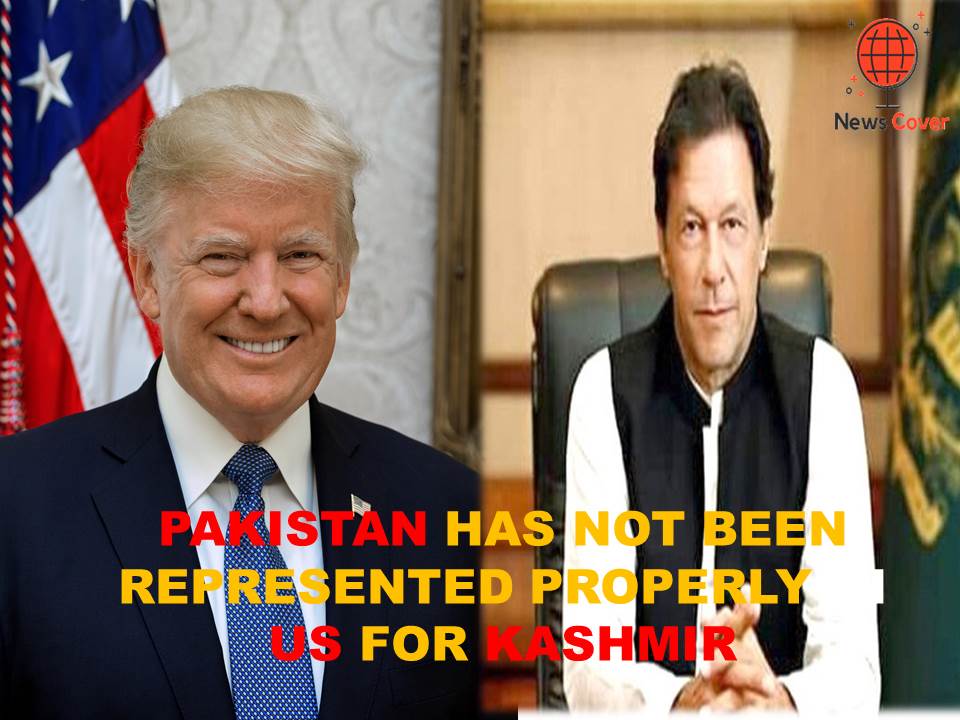
Pakistan has not been represented properly in US for Kashmir | News Cover

No comments

Thursday, July 25, 2019

World, pakistan, imran khan, world news, news cover, the news cover, news cover world news, donald trump, Imran Khan,  imran khan trolled,

News Cover: Pakistan is desperate to reach an agreement with Kashmir in any way. At least, the Prime Minister wants to keep the message of compromise. His government is taking effective step to destroy terrorism. Imran Khan assures the international world, including India. Donald Trump agrees to mediate over Kashmir. It is not yet clear whether Narendra Modi has approved the proposal. But the Prime Minister of Pakistan does not rely only on the proposal of the US President over Kashmir. Rather, he wants to direct talks with India.

Pak Prime Minister attended a US think-tank meeting. Imran offered to negotiate a settlement with Kashmir. however, Pak PM highlighted the old position of Pakistan over Kashmiris' demands.


After Uri and Pulwama attacks, the relationship between India and Pakistan is very bad. Even The situation of war is created. Now, The Pakistani Prime Minister directly loses responsibility for the Pulwama attack. 

Pakistan is under immense pressure on the international world for addicted terrorism. The Prime Minister also pledged to eliminate terrorists from the country. Also said, said it was time to reset the relationship between the two countries, based on trust and mutual respect.

The Prime Minister of Pakistan is trying to convey the message of feel Good from the stage of the international organization.
WE WISH FOR A POLLUTION FREE INDIA
News Cover © all rights reserved
made with by templateszoo